

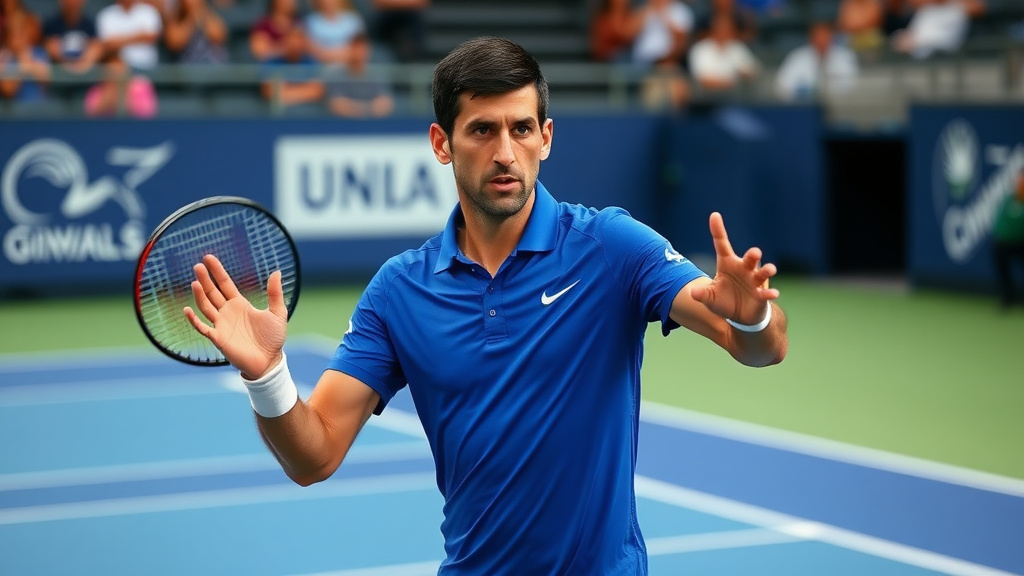
Novak Djokovic, widely recognized as one of tennis’s greatest athletes, has long attributed his exceptional footwork as a cornerstone of his court dominance. In this piece, we explore the sophisticated methods that have enabled Djokovic to outsmart his rivals and maintain peak performance throughout years of elite play. If you are an aspiring competitor seeking to elevate your game or a coach looking to refine your coaching approach, learn the exact foot positioning techniques that elevate talented athletes into champions.
Basis of Court Movement
Effective court movement forms the bedrock of professional tennis excellence. Novak Djokovic’s legendary footwork starts with understanding the core concepts of weight management and balance. Every movement on the court must be intentional and purposeful, allowing players to get to the ball efficiently while preserving optimal positioning. The foundation encompasses proper stance, weight shift, and directional awareness. By perfecting these key components, players build the agility and responsiveness required to perform at the highest levels of elite tennis.
The significance of court positioning is undeniable in modern tennis. Djokovic consistently demonstrates how superior footwork enables players to dictate rallies and manage the pace of play. A strong foundation allows athletes to recover quickly between shots, preserve court position, and create attacking opportunities. Players who invest time in developing core footwork skills gain notable benefits in stamina and reliability. These essential techniques create the foundation for all advanced techniques are built, making them vital to any serious competitive player.
The Split Step Technique
The split step is one of tennis’s most critical yet often overlooked fundamental movements. Novak Djokovic demonstrates this technique with impressive exactness, placing himself ideally to react to oncoming balls. The split step consists of a minor leap timed as the opponent connects with the ball, permitting competitors to produce rapid motion in any direction. This technique counteracts forward motion and readies the physique for swift directional changes. Mastering the split step timing and execution markedly boosts court positioning and defensive capabilities during long exchanges.
Djokovic’s split step technique demonstrates why this skill distinguishes elite players from typical players. Correct timing of the split step requires anticipatory ability and knowledge of opponent movements. The movement must be dynamic yet balanced, creating sufficient power for fast changes in direction. Players should land with weight distributed on the forefoot, knees slightly bent, ready for immediate action. Regular practice of split step mechanics builds the physical memory required for instinctive movement on court during intense match conditions.
- Perform split step precisely as opponent strikes the ball.
- Land balanced on forefoot with bent knees every time.
- Apply split step prior to each shot in matches.
- Build dynamic strength through consistent split step practice.
- Read opponent tendencies to execute split steps with precision.
Strategic Positioning Methods
Novak Djokovic’s command of court positioning extends far beyond basic footwork mechanics. His planned strategy includes anticipating rival positioning tendencies and placing himself to maximize court coverage. By analyzing serve direction, spin, and pace, Djokovic positions himself optimally before the ball crosses the net. This proactive positioning minimizes reaction time and enables him to strike shots with improved accuracy and consistency, giving him a substantial advantage.
The basis of Djokovic’s court positioning approach rests on understanding court geometry and distance control. He sustains perfect positioning from the baseline, sidelines, and net determined by game conditions and opponent tendencies. This strategic placement allows him to move across the court effectively while limiting superfluous footwork. High-level athletes must cultivate spatial awareness to position themselves where they can execute both attacking and defensive shots effectively, regardless of adversary location or ball path.
Sideways Motion Efficiency
Lateral movement represents the backbone of Djokovic’s defensive strengths and transition to offense. His side-to-side agility allows him to cover the court while maintaining balance and quality of shot. Djokovic emphasizes quick lateral movements paired with regulated deceleration, facilitating swift directional shifts without sacrificing balance. This technique demands powerful leg muscles, proprioceptive awareness, and neuromuscular memory through repetitive drills that replicate game situations and challenging match situations.
Effective lateral movement relies on correct footwork sequencing and weight distribution. Djokovic employs rapid positioning adjustments to optimize positioning before striking the ball. His technique includes maintaining a lower center of gravity during lateral movement, allowing faster acceleration and deceleration. Players should practice timing the split-step, crossover steps, and recovery positioning to develop the lateral movement efficiency that characterizes elite competitive tennis and separates champions from intermediate players.
- Perform split-step precisely as your opponent initiates their stroke.
- Use crossover steps for quick side-to-side court coverage and coverage.
- Maintain low center of gravity throughout lateral displacement patterns.
- Practice explosive push-off actions from both legs equally.
- Build rapid adjustment movements for refining end positioning.
Practice Application and Skill Drills
Implementing Djokovic’s footwork techniques during competitive matches requires deliberate practice and psychological preparation. Start by integrating these techniques into training sessions against quality opponents, progressively raising intensity and competitive demands. Concentrate on staying well-positioned during rallies, particularly when moving from baseline rallies and net approach. Video analysis of your matches helps identify footwork inconsistencies and areas requiring refinement. Consistent application builds muscle memory, enabling instinctive movement during pressure situations without conscious thought.
Tournament planning should include simulated game conditions where movement skills are evaluated under actual game situations. Train tiebreaks and deciding sets to strengthen belief in your footwork mechanics when fatigue sets in. Train with coaching staff to develop pre-match routines that solidify proper footwork habits. Mental visualization of effective movement performance boosts effectiveness during real competition. Reviewing match footage delivers important information for ongoing development and footwork modification based on opponent-specific challenges and match circumstances.
Increasing Dynamic Velocity
Rapid acceleration separates elite players from the rest of the field, enabling rapid court coverage and aggressive positioning. Djokovic’s training emphasizes fast, forceful initial movements that generate momentum toward the ball. Power-based drills, such as box jumps and lateral bounds, strengthen the explosive muscle groups essential for explosive movement. Sprint intervals on court replicate game situations, conditioning your system to burst forward powerfully while preserving stability and precision. Regular speed training builds cardiovascular capacity, allowing sustained explosive movements throughout long competitions and consecutive events.
Court-specific training exercises should simulate competitive situations requiring explosive acceleration from multiple locations. Practice transitioning from defensive positions to attacking postures using rapid footwork. Include cone drills that demand rapid direction changes and explosive starts from a stopped stance. Work on explosive recovery steps after hitting groundstrokes, positioning yourself optimally for how your opponent will react. Integrate speed training with footwork technique training to ensure powerful movement supports correct stroke technique and court placement throughout competitive play.
- Box jumps enhance lower body explosive strength and rapid muscle fiber engagement.
- Lateral bounds strengthen side-to-side explosive movement and court positioning velocity.
- Sprint intervals increase rapid acceleration ability under match-like fatigue conditions.
- Cone drills refine explosive directional changes and rapid court positioning transitions.
- Plyometric training strengthens muscles required for rapid footwork movement patterns.
