

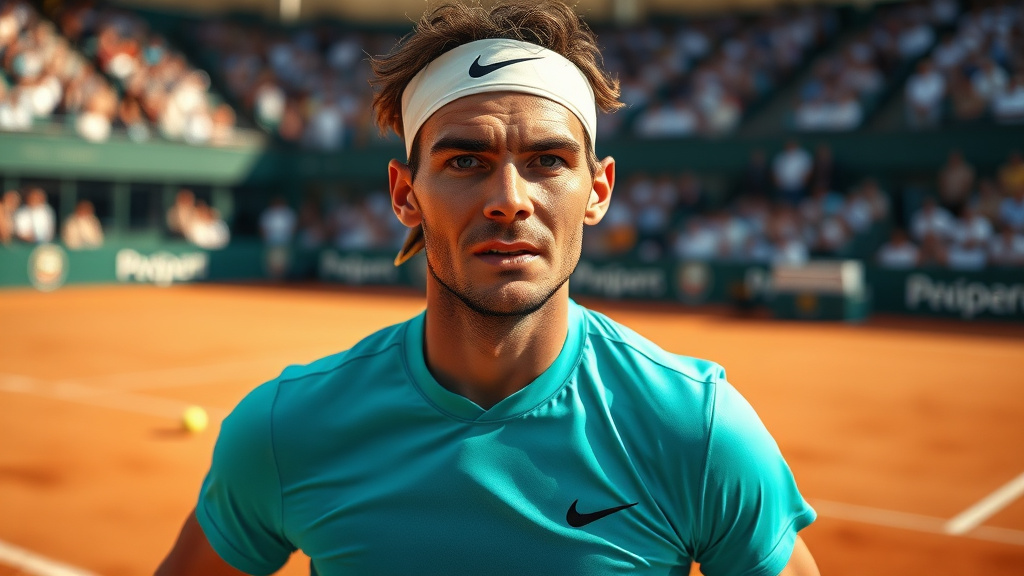
Rafael Nadal’s unprecedented supremacy on clay courts has profoundly revolutionized professional tennis, establishing a legacy that stretches far beyond individual titles. With an impressive 14 French Open championships and multiple Masters 1000 victories on red clay, Nadal has crafted a tactical framework that integrates aggressive baseline play, outstanding movement, and competitive fortitude. This article explores how his dominance on clay transformed competitive strategies, influenced competitor strategies, and cemented his status as one of tennis’s greatest champions.
Mastering the Clay Surface
Rafael Nadal’s mastery on clay courts comes from his remarkable grasp of the surface’s special features. Clay’s slower pace and higher bounce create distinctive playing conditions that reward aggressive baseline players with excellent movement and court placement. Nadal’s powerful topspin forehand turns remarkably dominant on clay, as the surface enhances the ball’s rotation and flight pattern. His ability to slide smoothly across the court while preserving stability allows him to recover apparently impossible balls and dominate points from the baseline, creating a physical and strategic edge that most opponents cannot equal.
The Spanish maestro strategy on clay stresses patience alongside explosive offensive opportunities. Rather than rushing to finish points, Nadal constructs rallies deliberately, wearing down opponents through relentless consistency and precision. His ability to defend convert into offensive weapons, as he transforms defensive positions into aggressive hitting moments. This balanced approach troubles competitors who look for quick points on faster surfaces. Nadal’s willingness to engage in extended baseline battles suits his strengths, helping him control match tempo and exploit opponents’ stamina limitations over extended periods.
Mental resilience represents a essential aspect of Nadal’s clay court mastery. The demanding nature of clay-court tennis necessitates exceptional mental clarity, resilience, and competitive drive. Nadal’s legendary fighting spirit and refusal to surrender points, no matter the situation, have established themselves as hallmarks of his clay-court performances. His mental superiority emerges through unwavering focus during critical junctures and stunning recoveries from positions that appeared hopeless. This mental fortitude, combined with superior technical skills and athletic preparation, creates an virtually unstoppable combination that has defined his exceptional clay court legacy.
Technical Elements of Nadal’s Clay Game
Key Components of Nadal’s Clay Game
Rafael Nadal’s clay-court dominance stems from carefully developed technical aspects that function in perfect harmony. His game combines outstanding footwork, precise racket positioning, and strategic shot selection, all optimized for clay’s unique surface characteristics. These technical pillars allow Nadal to control rallies, control court positioning, and dominate opponents through sustained pressure and aggressive baseline tactics.
Topspin Generation and Ball Handling
Nadal’s iconic topspin forehand represents the cornerstone of his clay court arsenal. By producing extreme spin through an exaggerated loop backswing and upward brushing motion, he creates balls that dip sharply over the net while bouncing high beyond the baseline. This topspin enables Nadal to hit aggressively while maintaining safety margins, pushing opponents into defensive stances and limiting their attacking opportunities on clay surfaces.
The precise mechanics of Nadal’s topspin requires exceptional timing, racket head speed, and body rotation. His semi-western grip combined with an open stance allows maximum spin generation while maintaining balance and court positioning. This physical advantage enables him to hit winners from seemingly defensive positions, transforming potential vulnerabilities into attacking chances that demoralize opponents.
- Rapid racket speed produces massive topspin rotation reliably
- Good net clearance paired with sharp dip maintains margin for error
- High bounces drives opponents past the baseline into defensive positions
- Open position enables unrestricted rotation and explosive power
- Semi-western hand position optimizes brush friction for maximum spin
Nadal’s ball handling on clay demonstrates exceptional accuracy and consistency throughout extended rallies. His ability to place topspin forehands within inches of sidelines while sustaining attacking pressure generates ongoing difficulty. Paired with dependable two-handed shots and strategically positioned slice variations, this comprehensive technical toolkit allows him to systematically dismantle opponents through superior court positioning and tactical execution.
Competitive Achievement and Lasting Influence
Championship Records and Achievements
Rafael Nadal’s tournament success on clay courts represents an unmatched achievement in professional tennis history. His 14 French Open titles represent an unmatched supremacy at a individual Grand Slam tournament, surpassing all competitors in the modern era. Beyond Roland Garros, Nadal has secured many Masters 1000 clay court titles, amassing more than 60 victories on red clay surfaces throughout his career. These statistics underscore his sustained mastery and tactical dominance on this specific playing surface, setting benchmarks that may persist for decades.
Impact on Tennis Tactical Approach
Nadal’s clay court mastery has substantially transformed how professional tennis players handle tournament preparation and match strategy. Competitors now invest significantly in developing footwork, spin techniques, and court positioning stability specifically tailored to clay court conditions. His hard-hitting topspin stroke and defensive capabilities have become the measure of modern clay court excellence, forcing rivals to adjust their playing styles accordingly. This strategic evolution has enhanced the level of clay court tennis, inspiring younger generations to refine their techniques within this specialized environment.
Enduring Heritage and Cultural Impact
Nadal’s clay court expertise has surpassed tennis, making him a cultural icon and inspirational figure worldwide. His unwavering determination, drive to compete and modest character have inspired aspiring athletes across multiple sports disciplines. The Spanish champion’s influence encompasses far more than record-breaking achievements but also a profound influence on how tennis is performed, taught, and celebrated globally. His contributions to professional tennis mean that his strategic innovations and competitive superiority will remain influential in the sport for years ahead.
